

First, sorry for the delay, I went home and caught the Minnesota plague (a bad cold).
Today, let’s talk about one of the most important relationships in finance. The connection between ROIC and WACC.
Think of running a business like borrowing money to buy a rental property. You want to make sure the rent you collect is higher than your mortgage payments, right? That's exactly what ROIC and WACC help you understand about companies.
ROIC (Return on Invested Capital) is how much profit a company generates from every dollar it invests. If a company has a 15% ROIC, it's earning 15 cents for every dollar it invests.
The Weighted Average Cost of Capital (WACC) represents the cost to the company of obtaining the capital in the first place. This includes interest on loans and what shareholders expect as returns. If WACC is 8%, the company pays 8 cents for every dollar it raises.
Here's why this matters: when ROIC is higher than WACC, the company creates value. When it's lower, it destroys value.
Let's say Apple has a ROIC of 20% and a WACC of 10%. That 10-point spread means Apple generates serious value for shareholders. Every new project earning above 10% makes the company more valuable.
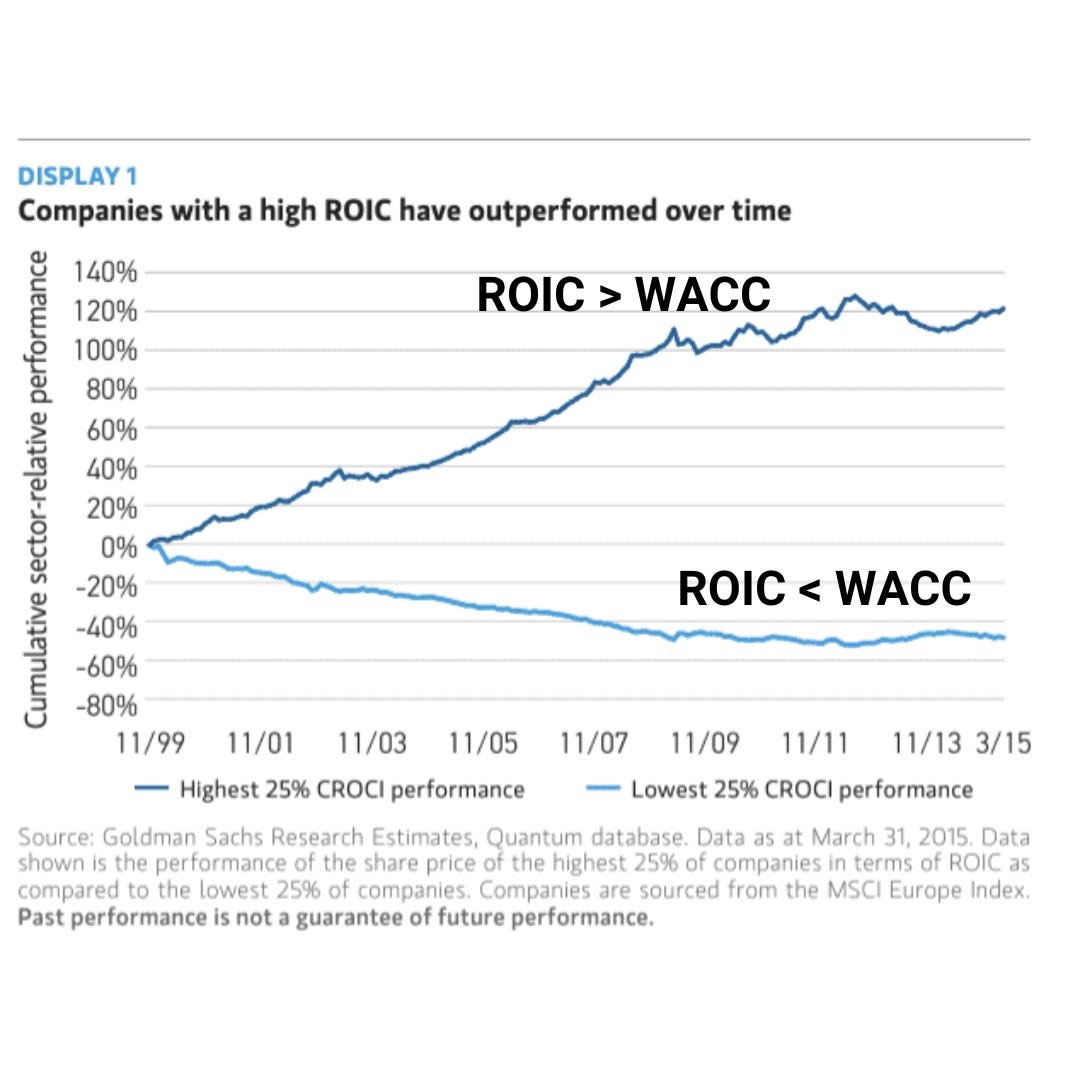
Compare that to a struggling retailer with ROIC of 6% and WACC of 9%. This company is destroying value with every dollar it invests. Not good for your portfolio.
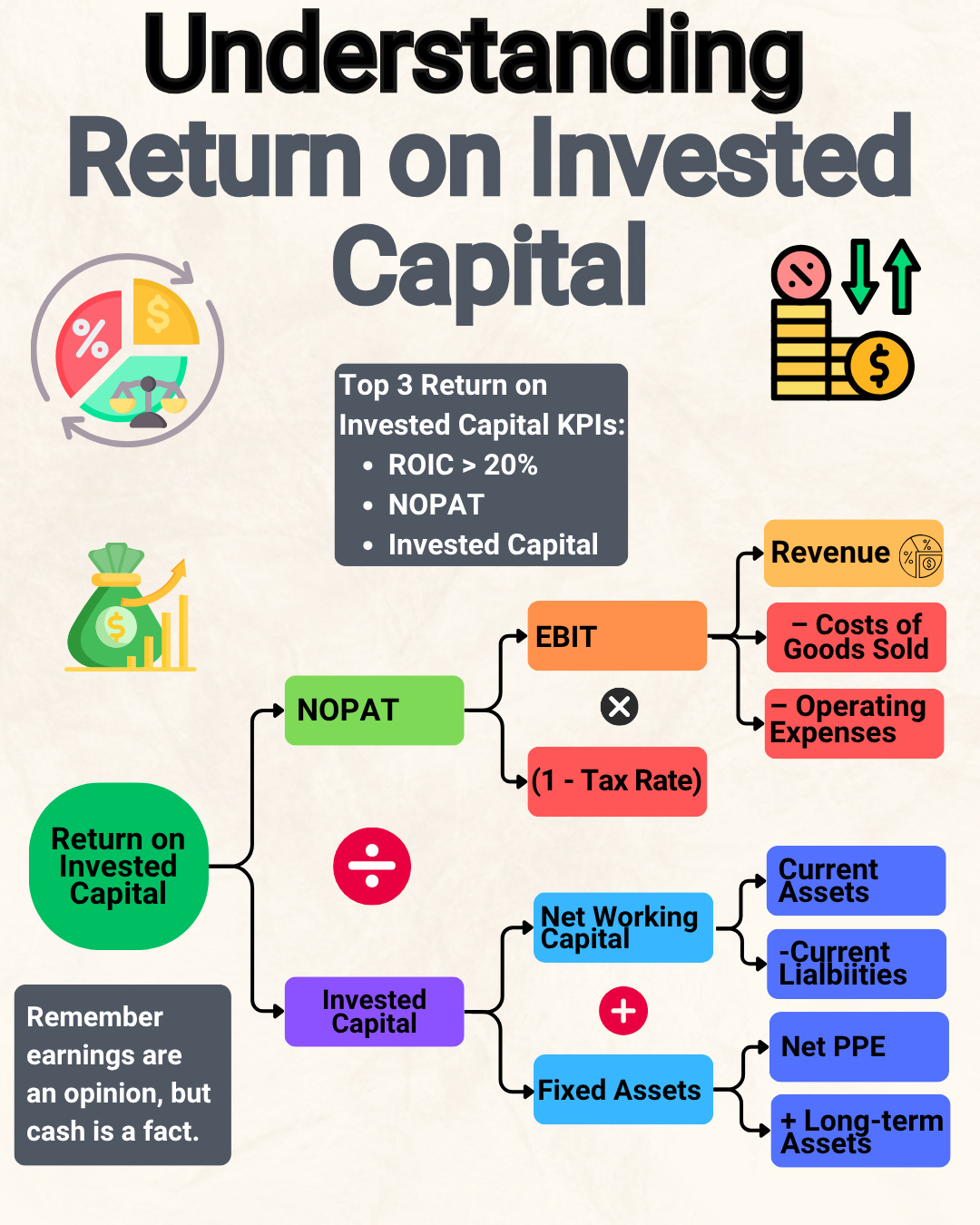
Understanding ROIC
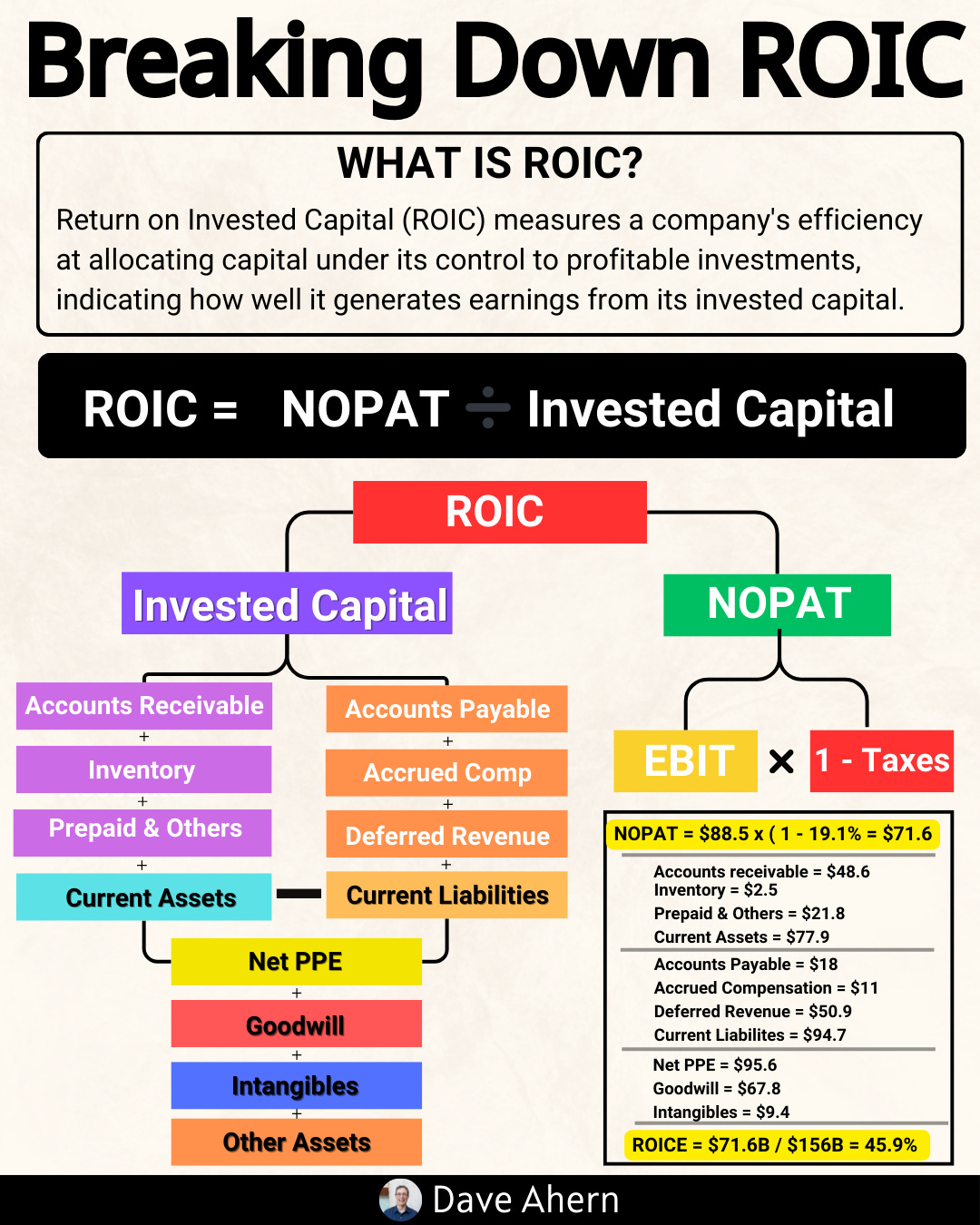
Breaking Down ROIC
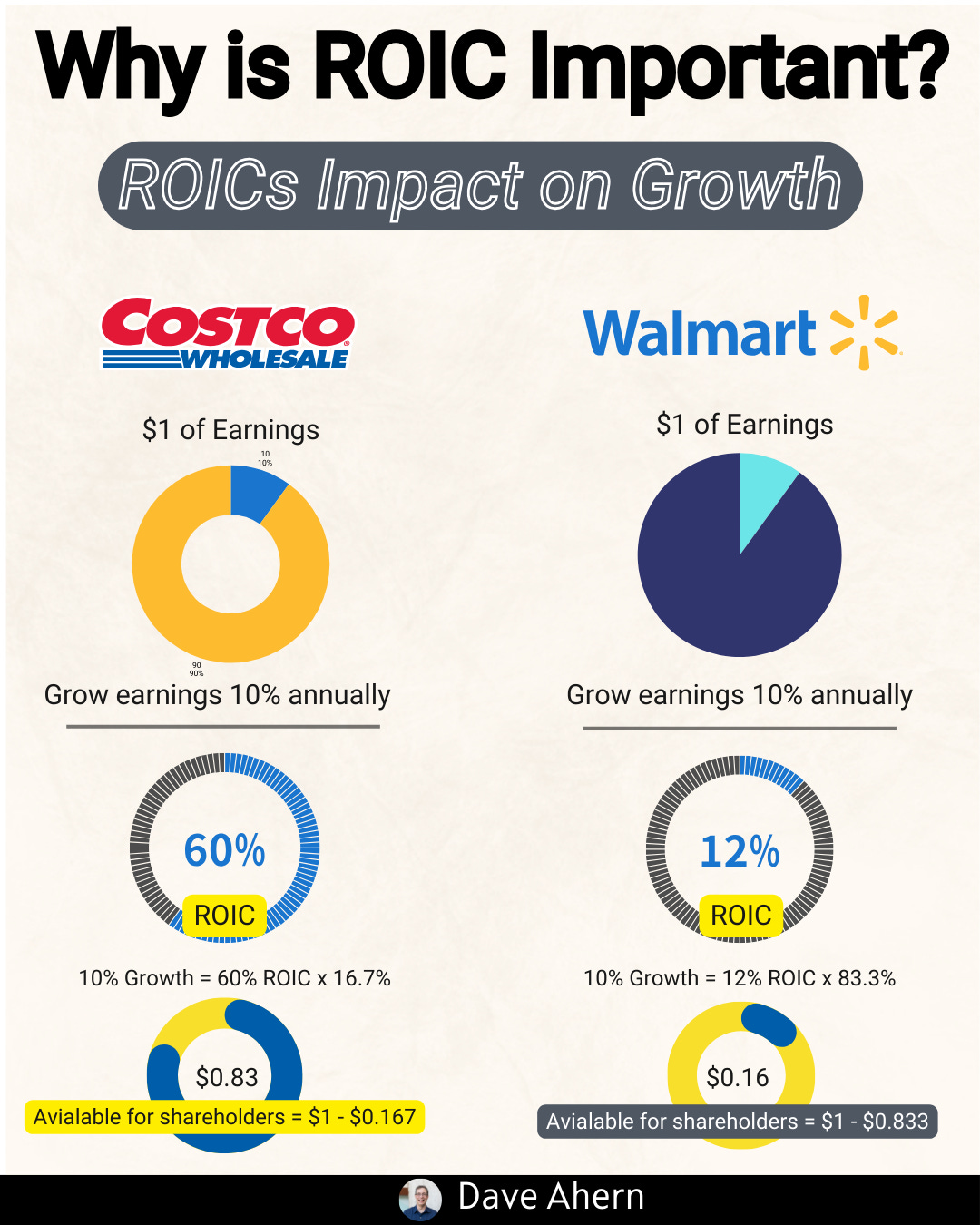
Why ROIC is Important
Understanding WACC
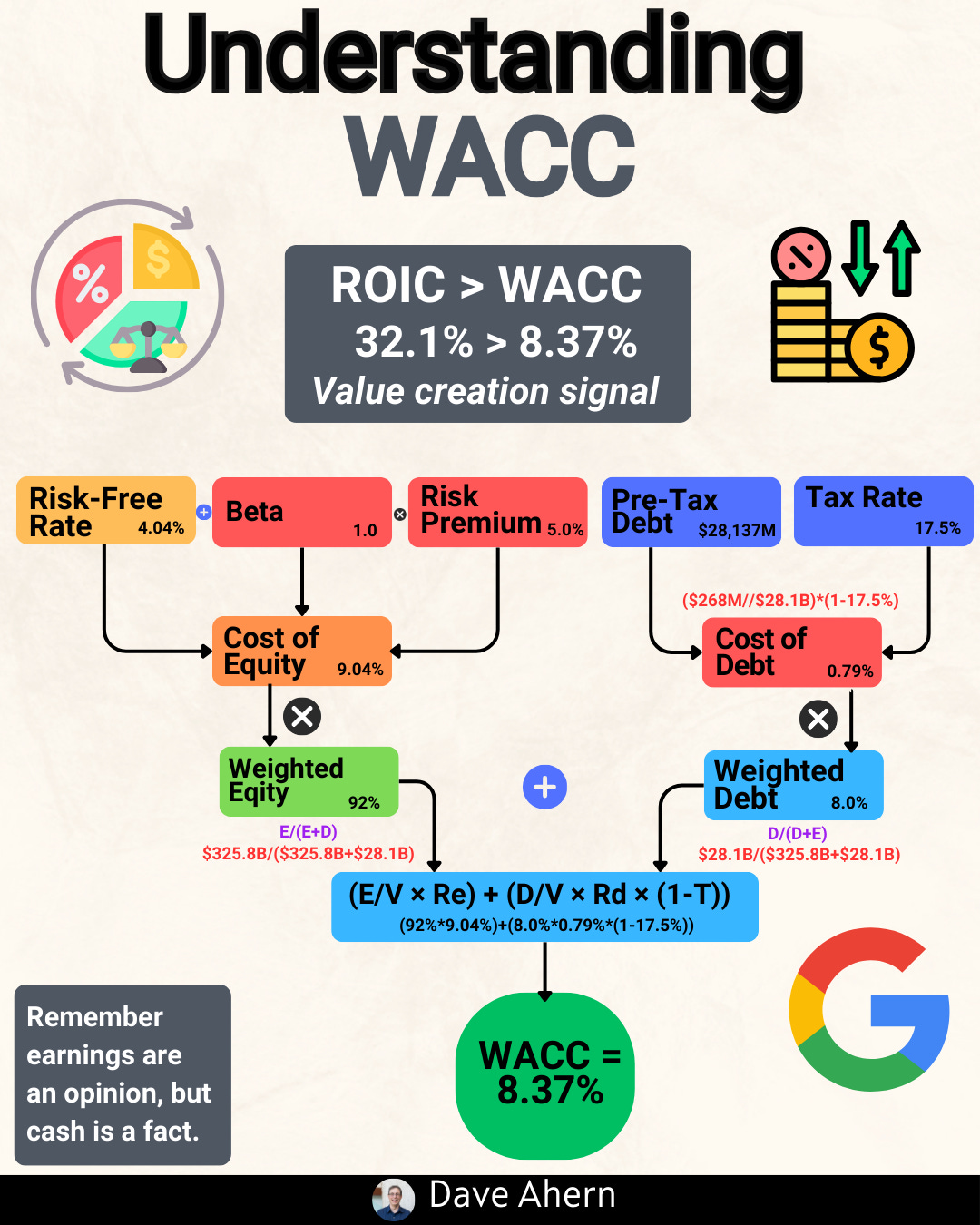
Smart investors look for companies with consistently high ROIC-WACC spreads. These businesses have competitive advantages that let them earn superior returns. Think Microsoft, Coca-Cola, or Amazon in their prime markets.
However, be cautious of companies where this spread is shrinking. It often signals increasing competition or a decline in business quality.
The bottom line? Companies that generate more revenue than they cost to fund tend to be excellent long-term investments. Those that don't? Probably best avoided.